The Real Reason Behind the Beautiful Northern Lights
19 May 2026
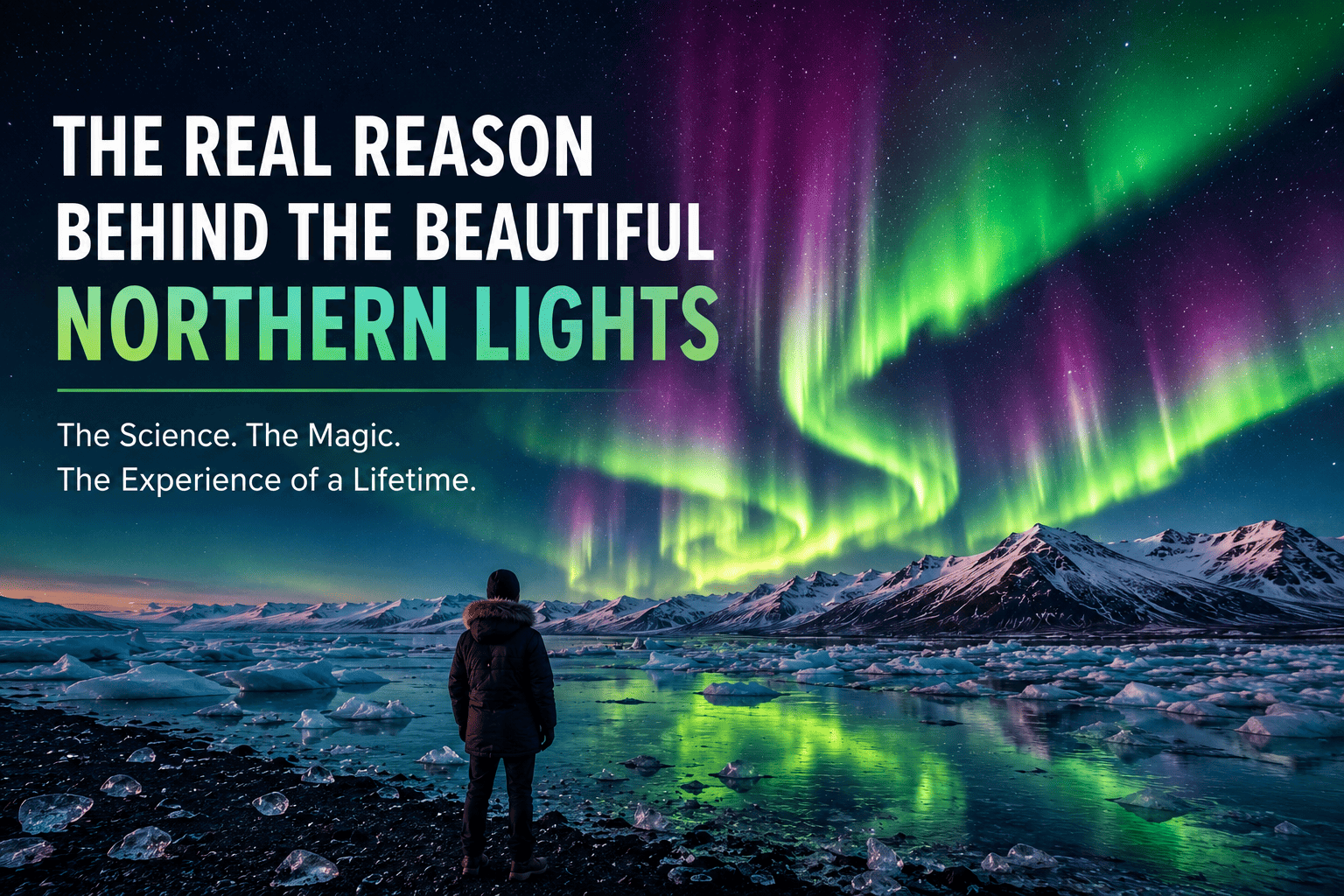
The Northern Lights are among the most fascinating natural displays on Earth. Imagine standing beneath a dark Arctic sky as waves of green, purple and pink light slowly dance across the horizon. It is a breathtaking experience that attracts travellers from around the world, especially those visiting Iceland.
But have you ever wondered what actually creates this beautiful natural phenomenon? The Northern Lights are not simply colourful lights appearing in the sky. They are the result of an extraordinary interaction between the Sun, Earth's magnetic field and gases in our atmosphere.
Understanding how this phenomenon works makes witnessing it even more special. Let's explore the science behind the Northern Lights, why Iceland is one of the best destinations to see them and what makes this experience so unforgettable.
What Are the Northern Lights?
The Northern Lights, scientifically known as the Aurora Borealis, are natural light displays that occur in the Earth's upper atmosphere. They are most commonly visible in regions close to the Arctic Circle.
These colourful displays appear in different shapes and patterns, including glowing arcs, moving curtains, rippling waves and bright bands of light. Green is the most frequently observed colour, although purple, pink, red and blue shades can also appear.
The phenomenon occurs when charged particles released by the Sun interact with gases in Earth's atmosphere. This interaction produces the beautiful colours that illuminate the night sky.
What Causes the Northern Lights?
The real reason behind the Northern Lights begins millions of kilometres away from Earth, with the Sun.
The Sun continuously releases charged particles into space through a stream known as solar wind. Sometimes, solar activity becomes stronger because of solar flares and coronal mass ejections, sending larger amounts of charged particles towards Earth.
When these particles reach our planet, Earth's magnetic field guides many of them towards the polar regions. There, they collide with gases in the upper atmosphere, mainly oxygen and nitrogen.
These collisions transfer energy to the atmospheric gases. As the gases release that energy, they produce light in different colours.
This entire process creates the spectacular natural display we know as the Northern Lights.
Why Do Northern Lights Have Different Colours?
One of the most interesting things about the Aurora Borealis is that it does not always look the same. Its colours depend mainly on the type of atmospheric gas involved and the altitude at which the interaction occurs.
Here is what creates some of its most recognisable colours:
-
Green: The most common colour, generally produced when charged particles interact with oxygen at altitudes around 100 - 300 kilometres.
-
Red: Usually associated with oxygen at higher altitudes, where the atmospheric conditions allow red light to develop.
-
Purple and Blue: These colours are mainly produced by interactions involving nitrogen.
-
Pink: Pink shades can appear when different colours overlap, particularly in the lower parts of an auroral display.
Every appearance is different, which is why no two Northern Lights experiences are exactly alike.
Why Is Iceland Famous for Northern Lights Viewing?
Iceland is one of the most popular destinations for witnessing the Aurora Borealis because of its location near the Arctic Circle. Its position makes it possible to experience auroral activity during the darker months of the year.
However, geographical location is only one part of the experience. Iceland also offers several advantages for travellers hoping to see the phenomenon.
Long Winter Nights: During winter, Iceland experiences extended periods of darkness, providing more opportunities to observe the Northern Lights.
Open Landscapes: Away from busy towns, visitors can find locations with less artificial light and clearer views of the sky.
Natural Scenery: Mountains, glaciers, waterfalls and volcanic landscapes create beautiful surroundings for watching the aurora.
Accessibility: Iceland has established tourism facilities, guided excursions and transport options that help visitors plan Northern Lights experiences.
Although Iceland offers excellent viewing opportunities, sightings are never guaranteed because auroral activity and weather conditions can change.
When Is the Best Time to See the Northern Lights in Iceland?
The Northern Lights are generally visible in Iceland from late August or September through early April. This period provides the darkness needed to observe the aurora.
September and October offer a combination of autumn scenery and increasingly dark evenings. November through February brings longer nights, although winter weather can sometimes make viewing more challenging. March and early April can also provide good opportunities, depending on the weather and solar activity.
For the best chance of seeing the display, look for:
-
Clear or partly clear skies.
-
Dark locations away from city lights.
-
Strong auroral activity.
-
Suitable nighttime viewing conditions.
Checking the weather forecast and aurora forecast before heading out can help you plan your experience.
What Makes Every Northern Lights Experience Unique?
The Northern Lights are a natural phenomenon, so their appearance is never completely predictable. Sometimes they appear as a faint green glow, while on other nights they create dramatic waves of colour across the sky.
Their intensity, movement, shape and colour depend on several factors, including solar activity, atmospheric conditions and the location from which they are viewed.
This unpredictability is part of what makes the experience so memorable. Travellers may spend several evenings waiting for the right conditions, only to witness an extraordinary display that lasts for a few minutes or continues for hours.
It is also worth remembering that photographs may show more vibrant colours than the human eye can see, particularly during weaker auroral displays.
Tips for Enjoying the Northern Lights in Iceland
A little preparation can make your Northern Lights experience more comfortable and enjoyable.
1. Dress for Cold Weather: Wear thermal layers, insulated jackets, gloves, warm socks and suitable footwear. Winter nights can be extremely cold.
2. Choose a Dark Viewing Location: Move away from streetlights, buildings and other sources of artificial lighting.
3. Check the Weather: Cloud cover can prevent you from seeing the aurora, even when solar activity is strong.
4. Be Patient: The Northern Lights may appear unexpectedly, so allow enough time for your viewing experience.
5. Keep Your Camera Ready: If you want to photograph the aurora, use a tripod and learn how to adjust your camera's exposure settings for night photography.
6. Consider a Guided Experience: Local guides can help you identify suitable viewing locations and understand changing weather conditions.
Conclusion
The Northern Lights are much more than a beautiful display in the night sky. They represent a fascinating connection between solar activity, Earth's magnetic field and the gases surrounding our planet.
Iceland provides a wonderful setting to witness this natural phenomenon, combining dark winter skies with remarkable landscapes and memorable travel experiences. Whether you are interested in the science behind the aurora or simply want to see its colours dancing overhead, witnessing the Northern Lihts can become one of the most unforgettable moments of your journey.
With thoughtful planning and a little patience, your Iceland holiday could give you the opportunity to experience one of nature's most extraordinary spectacles. Explore Iceland holiday experiences with Akshar Tours and start planning a memorable journey.