Vegetarian and Jain Food in Tokyo and Kyoto: Where to Eat and How to Ask
Siya P · 09 Nov 2026
Tokyo and Kyoto are easy for vegetarians and workable for Jains, as long as you know three things before you sit down.
First, dashi, the fish stock most Japanese cooking starts from, hides in food that looks completely vegetarian, so saying no meat is not enough. Second, the Indian restaurants around Okachimachi in Tokyo are the safe bet, and one of them is run by a Jain family. Third, shojin ryori, the Buddhist temple food Kyoto is famous for, leaves out onion and garlic but leans hard on root vegetables, which matters if you keep Jain. This is part of the Akshar Travels Founders Series: the lists our own Japan team uses to plan trips, with a card at the end you can show in any restaurant.
Last checked November 2026. Hours, menus and closing days change often in both cities, so check before you go. If a place has changed, tell us and we will update the list.
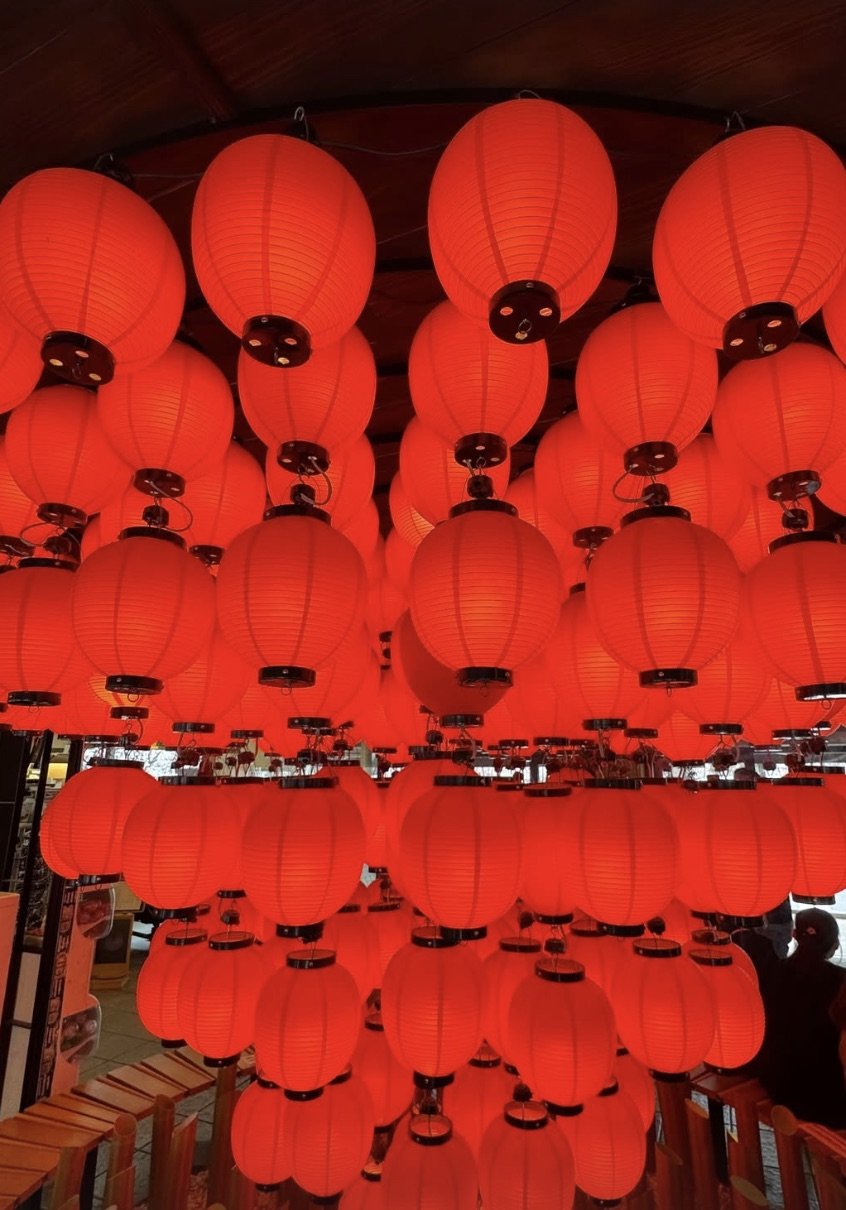
Red lanterns, from our team's own Japan photos.
The dashi problem, and the exact ask
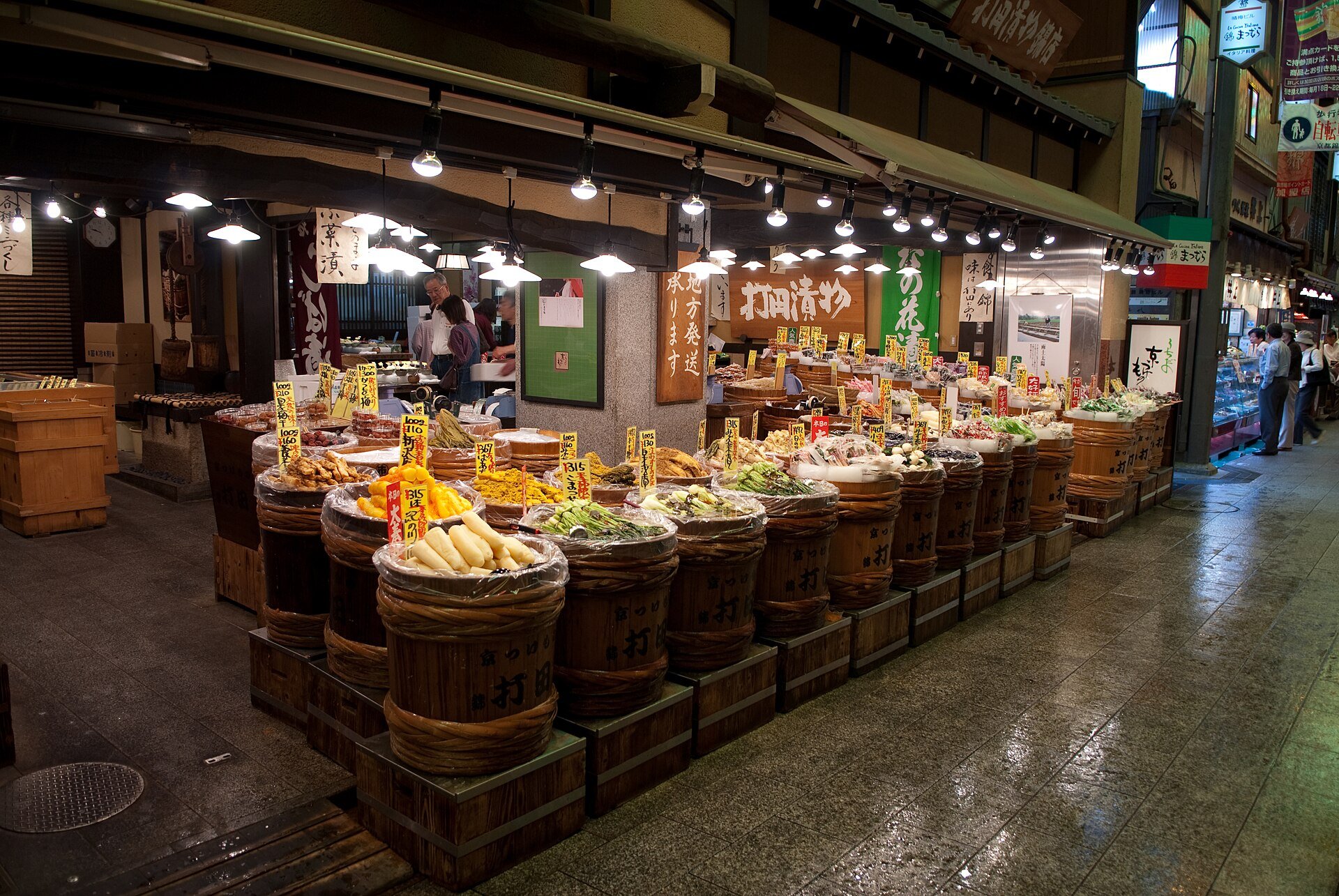
Pickles at Nishiki market in Kyoto. Many are plain vegetables and salt, and some are seasoned with fish stock.
Dashi is usually made from bonito flakes, sometimes with kombu seaweed. It goes into miso soup, the broth for udon and soba, simmered vegetables, tamagoyaki, dipping sauces and plenty of pickles. A kitchen can make you a dish with no meat in it and still pour dashi into it without thinking twice, because to most cooks dashi is not meat.
So ask for three things at once, every time: no meat, no fish, no dashi.
Niku, sakana, dashi wa irenaide kudasai.
Please leave out meat, fish and fish stock.
Kombu dashi, made only from seaweed, is fine for most vegetarians. If a place says its stock is kombu only, that is a good sign. The card further down says all of this in Japanese, so you do not have to.
Tokyo: where to eat
For a full Indian vegetarian meal with no questions to ask, go to Okachimachi, the stop between Ueno and Akihabara. Two of the best places in the city are a few minutes apart there.
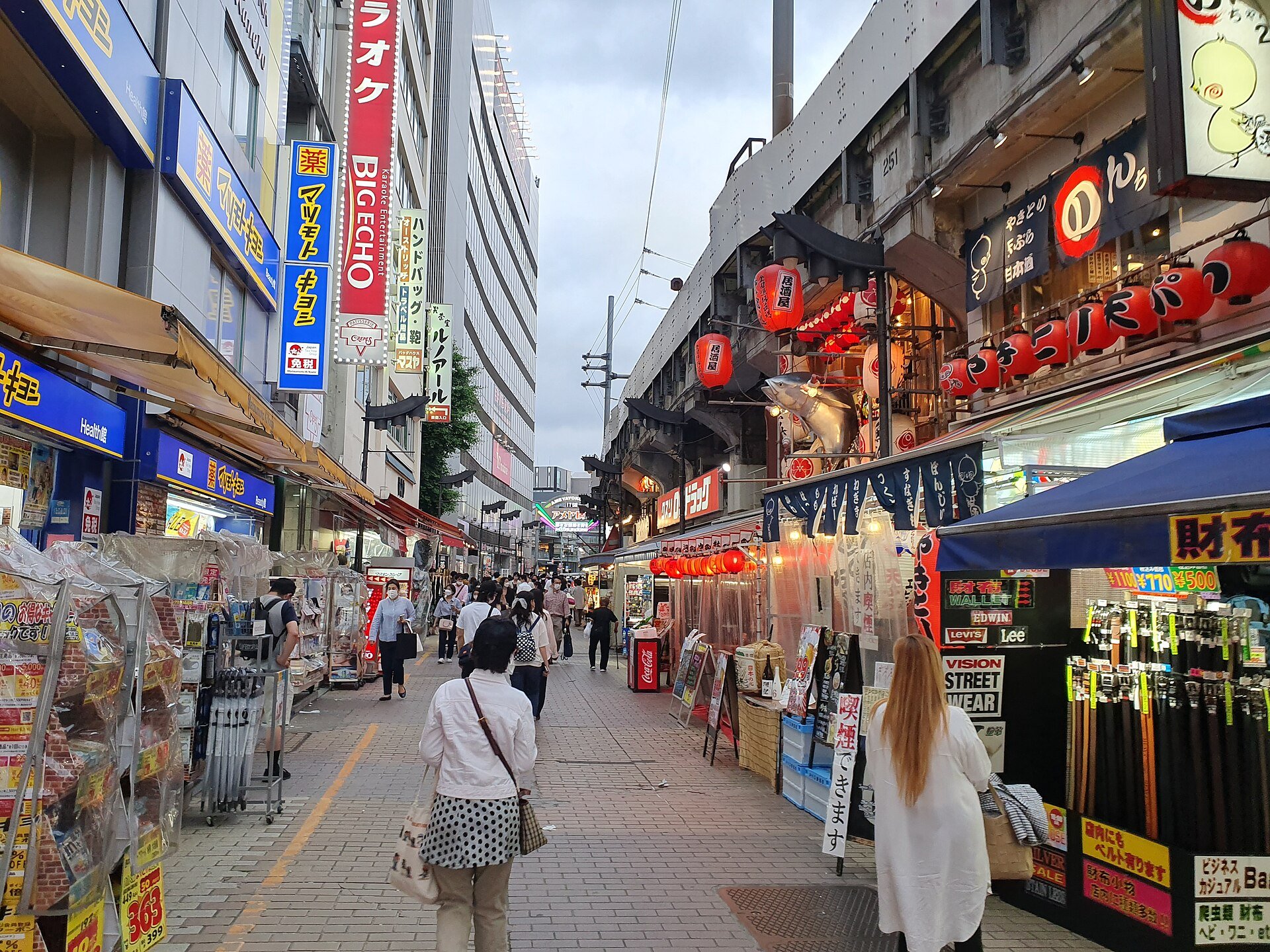
Ameyoko, the market street under the tracks from Ueno to Okachimachi.
Vege Herb Saga
Okachimachi, a short walk from JR Okachimachi Station
A fully vegetarian Indian restaurant in a basement, run by a Jain family, with North and South Indian food, dosas included. Vegan and Jain dishes are marked on the menu, and there is no alcohol. Lunch and dinner most days; check before you go.
A small vegetarian Indian kitchen nearby that is halal certified and Jain friendly. Say Jain when you order, so the cook knows to leave out onion, garlic and root vegetables.
Open since 1989 and usually called Japan's first Indian vegetarian restaurant. Useful when you are staying on the west side of the city. Ask about onion and garlic when you order if you keep Jain.
Home to the largest Indian community in Tokyo, with Indian grocery stores and home style restaurants. Worth the trip if you are in Tokyo for a while and want to stock up on snacks you trust.
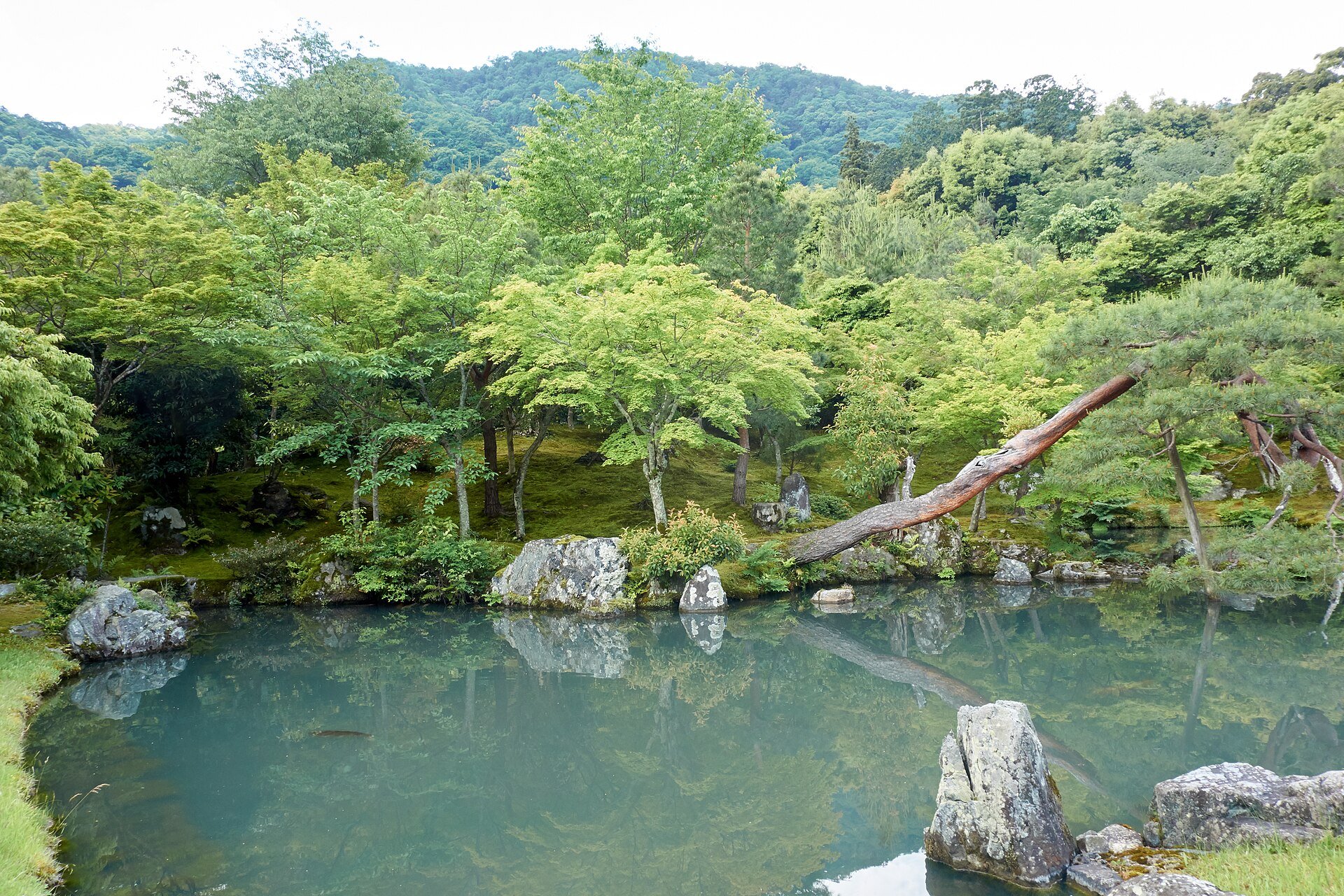
The garden at Tenryu-ji in Arashiyama, where Shigetsu serves temple lunch.
Kyoto: temple food, honestly
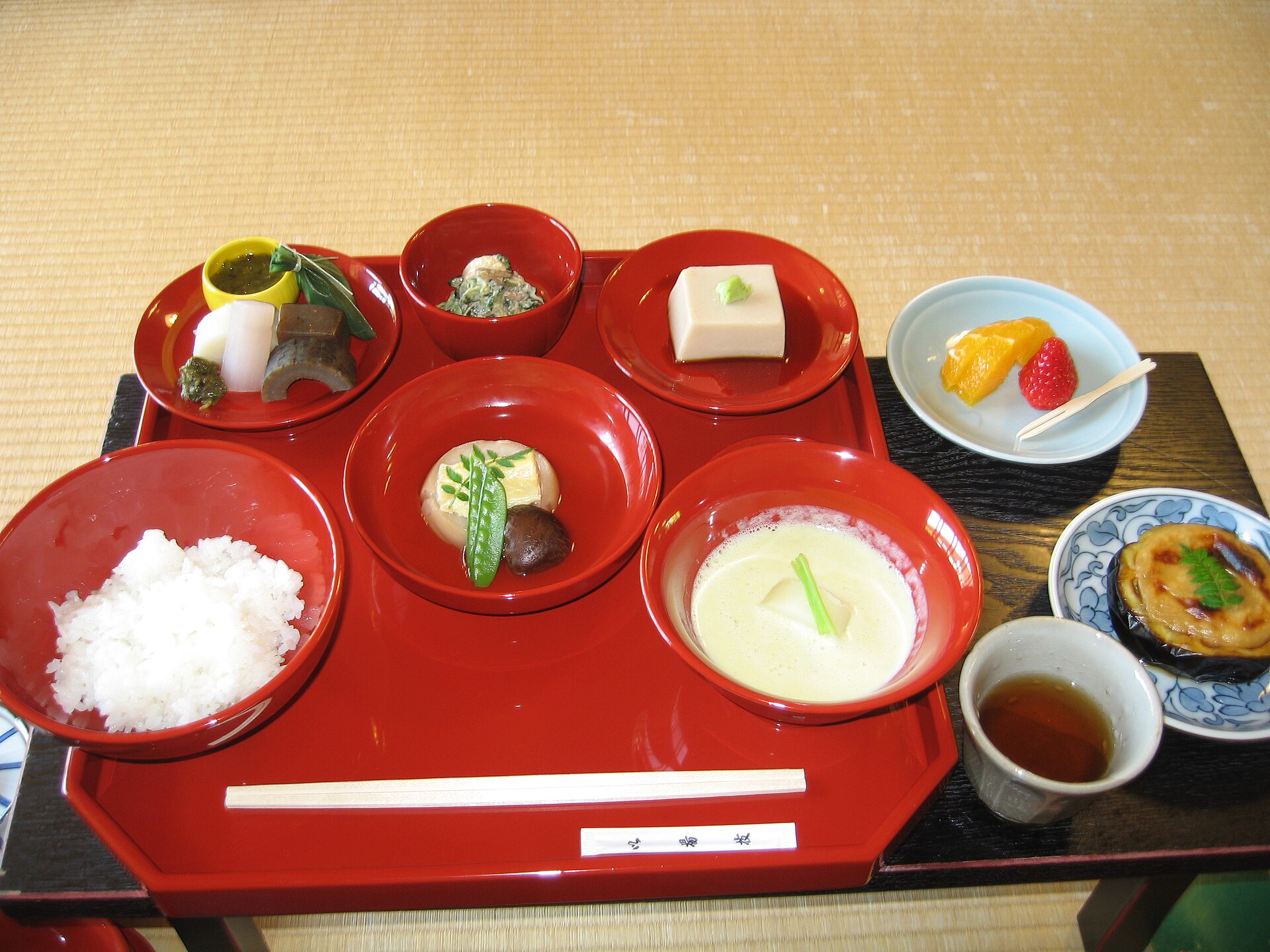
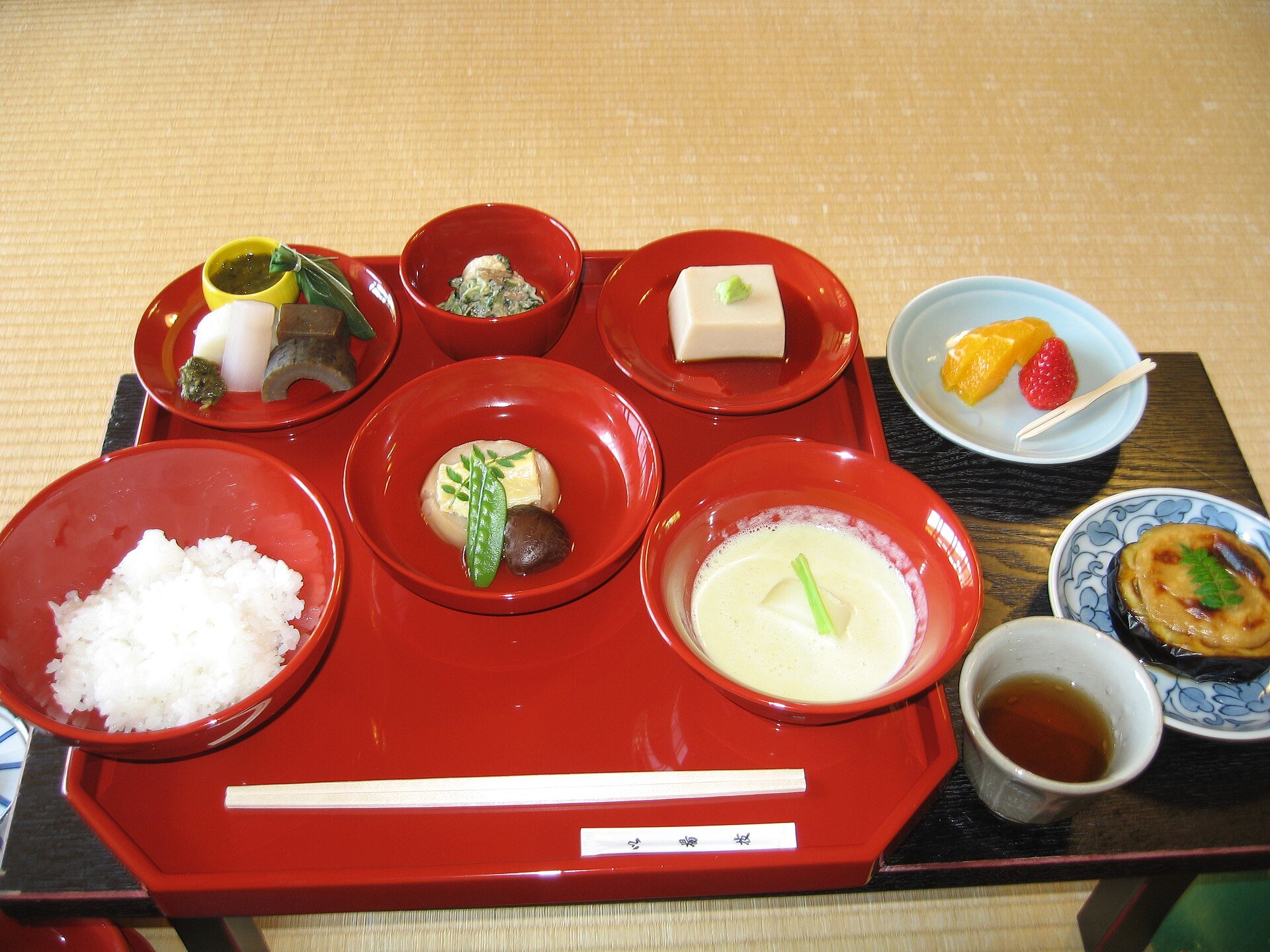
Shojin ryori is the vegetarian cooking of Zen temples, and Kyoto is the best place in Japan to eat it.
The good news: shojin ryori uses no meat, no fish and no fish stock. Its dashi is made from kombu and dried shiitake. It also bans the five pungent roots, called gokun: garlic, onion, leek, chives and scallions. For a vegetarian, it is the one Japanese meal where you can stop asking questions.
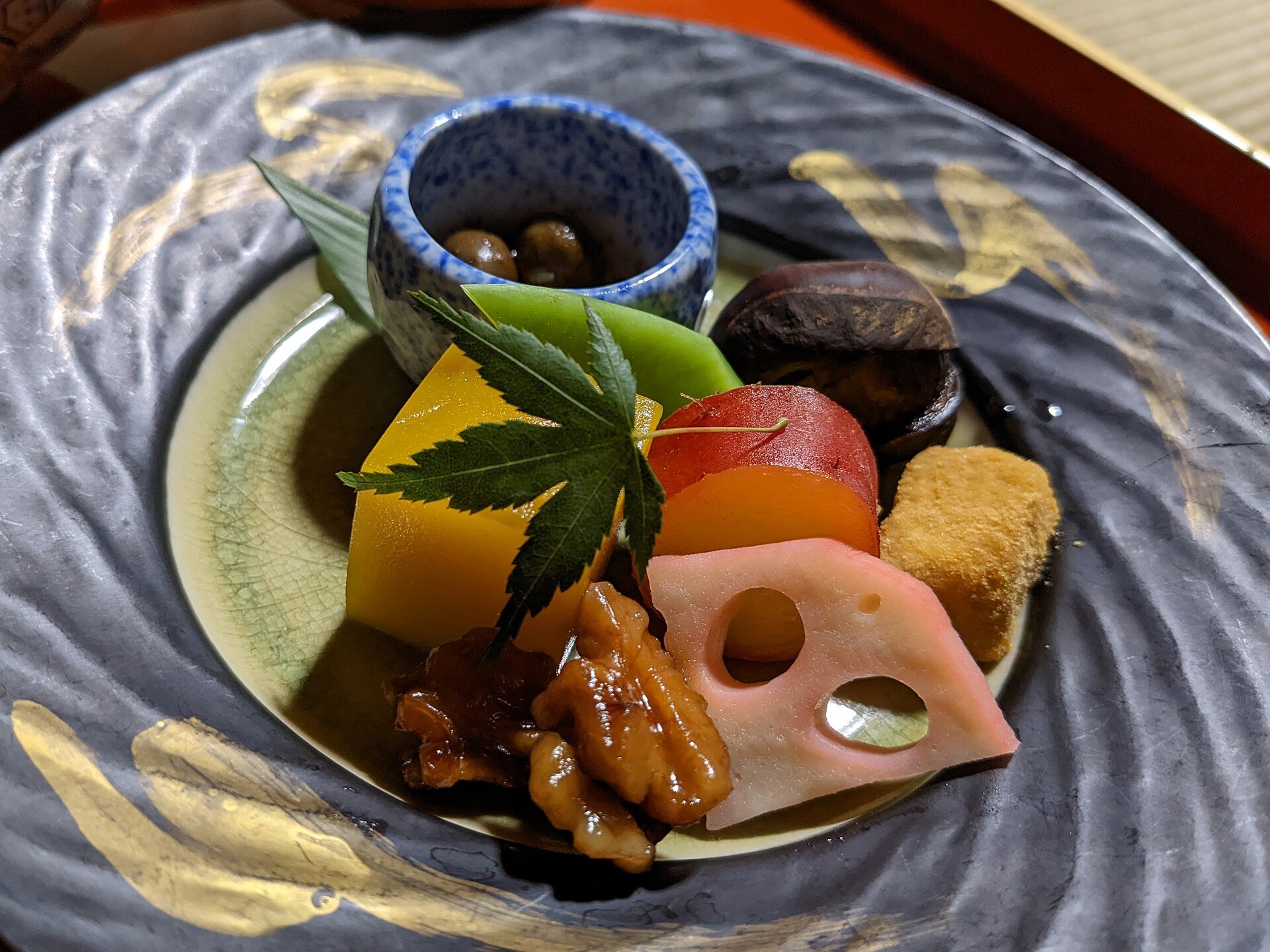
The honest part for Jains: it is built on root vegetables. Daikon, burdock, lotus root, taro and potato show up all through a set meal. Many temple kitchens serve a fixed course, so ask when you book whether they can leave the root vegetables out, and expect that some cannot.
Where to eat in Kyoto
Three temple meals, one Jain-safe Indian kitchen, and one vegan cafe for the nights you just want comfort food.
Shigetsu
Inside Tenryu-ji, Arashiyama
Shojin ryori served inside the temple grounds, with a view of the garden. Lunch only, from 11 to 2, and you need a reservation. Pair it with the bamboo grove next door.
North Kyoto, a few minutes' walk from Kuramaguchi Station
A small Zen temple of the Obaku school that serves fucha ryori, the temple cuisine that came to Japan from China: a long course of small simmered and fried vegetable dishes. Reservation only.
A shojin ryori restaurant next to the great Zen temple of Myoshin-ji, where its founder learned the cooking. Set courses with a kaiseki feel, and bento boxes at lunch. Book ahead.
A vegetarian Indian restaurant that cooks with no meat, fish, eggs, onion, garlic or leek, and can make every dish Jain or vegan. The easiest Jain dinner in Kyoto, and close to Kiyomizu-dera. Lunch and dinner, with irregular closing days, so check before you go.
Fully vegan cafe food from a Tokyo vegan group, for the night you want something familiar. Vegan is not the same as Jain: onion, garlic and root vegetables are all fair game in vegan cooking, so ask before you order.
Above: a spring shojin ryori set, and a temple appetizer with slices of lotus root, the kind of root vegetable a Jain diner will want to ask about.
The card to show
Screenshot this and hand your phone to the server. It is polite, it is clear, and it saves you trying to explain dashi in a busy kitchen.
The vegetarian card is open by default. If you keep Jain, tap to switch to the Jain card, which adds eggs, onion, garlic, leek, ginger and root vegetables. If you eat eggs or dairy differently, tell the server; the card cannot know that.
Keep Jain? Show the Jain cardBack to the vegetarian card
ジャイナ教の食事Jain
私はジャイナ教徒で、厳格な菜食です。Watashi wa Jaina-kyōto de, genkaku na saishoku desu.I am Jain and keep a strict vegetarian diet.
肉、魚、魚介類、卵、だし(かつお・煮干し)は食べられません。Niku, sakana, gyokairui, tamago, dashi (katsuo, niboshi) wa taberaremasen.I cannot eat meat, fish, seafood, eggs or fish stock.
玉ねぎ、にんにく、ねぎ、にら、しょうがも食べられません。Tamanegi, ninniku, negi, nira, shōga mo taberaremasen.No onion, garlic, leek, chives or ginger.
根菜(じゃがいも、にんじん、大根、ごぼう、れんこん、里芋など)も食べられません。Konsai (jagaimo, ninjin, daikon, gobō, renkon, satoimo nado) mo taberaremasen.No root vegetables: potato, carrot, daikon, burdock, lotus root, taro and so on.
ご飯、豆腐、豆、地上で育つ野菜は大丈夫です。Gohan, tōfu, mame, chijō de sodatsu yasai wa daijōbu desu.Rice, tofu, beans and vegetables that grow above ground are fine.
ご協力ありがとうございます。Go-kyōryoku arigatō gozaimasu.Thank you for your help.
ベジタリアンの食事Vegetarian
私はベジタリアンです。Watashi wa bejitarian desu.I am vegetarian.
肉(牛・豚・鶏)、魚、魚介類、卵は食べられません。Niku (gyū, buta, tori), sakana, gyokairui, tamago wa taberaremasen.I cannot eat meat (beef, pork, chicken), fish, seafood or eggs.
かつおだしなど、魚のだしも食べられません。Katsuo dashi nado, sakana no dashi mo taberaremasen.I also cannot have bonito or any other fish stock.
昆布だしは大丈夫です。Konbu dashi wa daijōbu desu.Kombu (seaweed) stock is fine.
ご協力ありがとうございます。Go-kyōryoku arigatō gozaimasu.Thank you for your help.
The card works best at places that cook to order. At a set course, show it when you book, not when you sit down.
Convenience stores: what is safe
7-Eleven, FamilyMart and Lawson are on nearly every corner, open all night, and they will feed you between meals if you read labels.
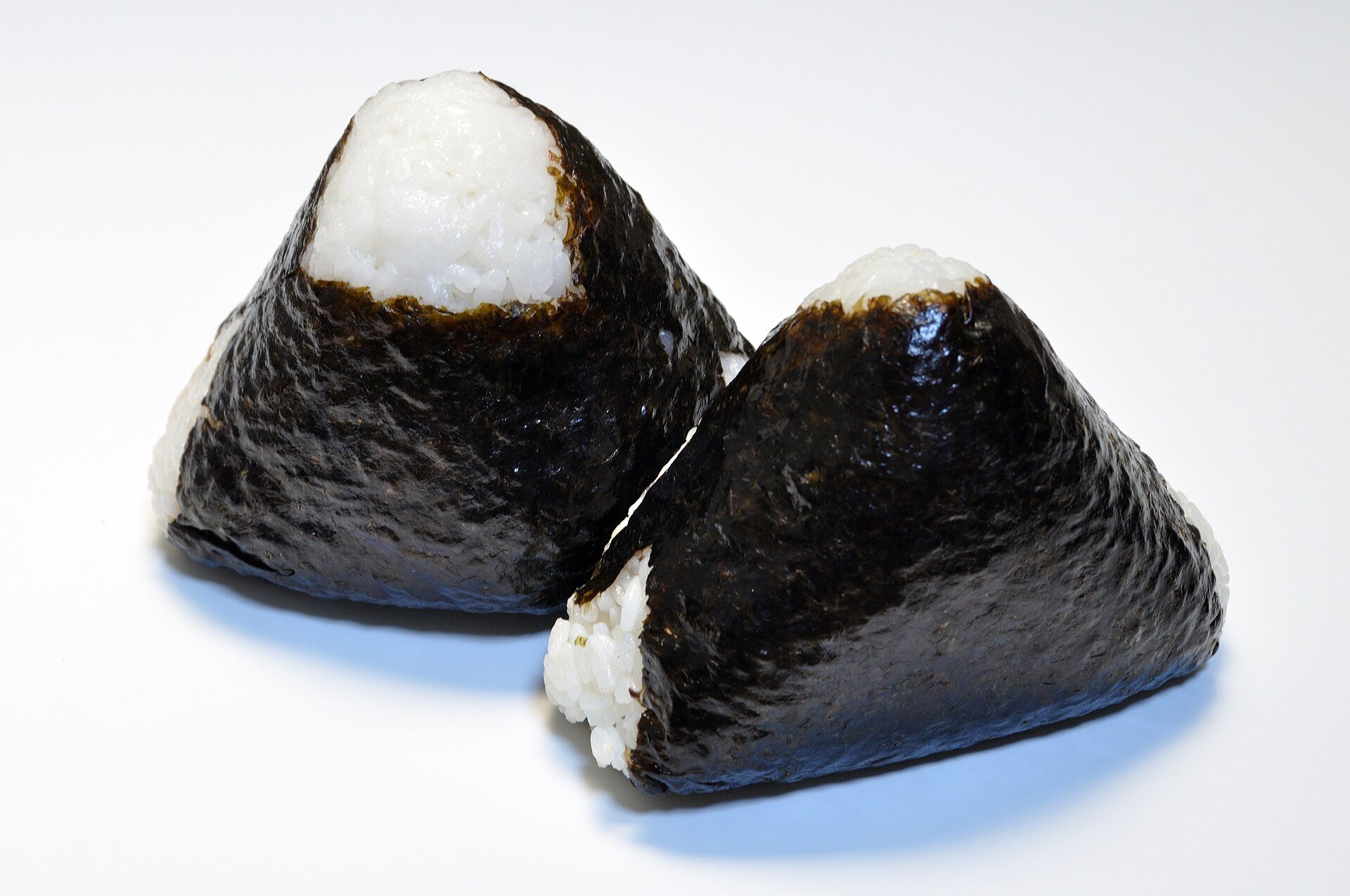
The safe shelf: onigiri with umeboshi (pickled plum) or plain salted rice, packs of plain cooked rice, edamame, fruit, bananas, nuts and plain green tea.
The catch: many onigiri fillings, kombu ones included, are simmered with bonito extract, and the instant miso soup by the register is almost always made with dashi. Look on the label for かつお (katsuo, bonito), 魚介 (gyokai, seafood) or エキス (ekisu, extract), and put it back if you see them.
If you keep Jain, stick to fruit, nuts, plain rice and umeboshi onigiri, and skip anything with negi (green onion) on top.
On an Akshar Japan tour, you do not need this guide on tour days. Our Japan tours arrange Indian vegetarian meals as part of the trip, with Jain meals on request, confirmed when you book.
This guide is for the free evenings in Tokyo and Kyoto, and for anyone traveling on their own. If you want to see how the meals work across a whole trip, our post on Japan tour packages from the USA with Indian food walks through it.
Want Japan planned around how you eat?
This is how our Japan team plans every trip. Tell us your dates and how you eat, and we will build the days around it: the hotel in the right neighborhood, the temple lunch booked, and vegetarian or Jain meals sorted before you land.
Coffee and plain tea are the easy part of any day in Japan. For everything else, send us your dates and we will price the trip against them.
Pictures from Wikimedia Commons: the Tenryu-ji garden by Celuici (CC BY-SA 3.0), the spring shojin ryori set by サフィル and the temple appetizer by Jpatokal (CC BY-SA 4.0), the Nishiki pickle shop by collinox (CC BY 2.0), and Ameyoko by Syced and the onigiri by Ocdp (CC0). The rest are ours.
FAQ
Is Jain food available in Japan?
Yes, with planning. Tokyo has Vege Herb Saga in Okachimachi, run by a Jain family, and Veg Kitchen nearby, which is Jain friendly. In Kyoto, Shama cooks with no onion, garlic or leek and can make any dish Jain. Elsewhere, carry a Japanese dietary card that names root vegetables, onion, garlic and fish stock.
Is Tokyo vegetarian friendly?
Tokyo is easy for vegetarians once you know about dashi, the fish stock in most Japanese cooking. Ask for no meat, no fish and no dashi every time, or eat at fully vegetarian places like the Indian restaurants in Okachimachi, Nataraj in Shibuya and Ogikubo, or one of the city's many vegan cafes.
What is shojin ryori, and is it Jain?
Shojin ryori is the vegetarian cooking of Zen Buddhist temples. It uses no meat, fish or fish stock, and it leaves out garlic, onion, leek, chives and scallions. It is not Jain by default, because it relies on root vegetables such as daikon, burdock, lotus root and taro. Ask when you book whether they can be left out.
Where do Indians eat in Tokyo?
Okachimachi, between Ueno and Akihabara, has two of the best Indian vegetarian restaurants, Vege Herb Saga and Veg Kitchen. Nataraj has vegetarian branches in Shibuya and Ogikubo. Nishi-Kasai in east Tokyo is home to the city's largest Indian community, with Indian grocery stores and home style restaurants.
What can a vegetarian eat at a Japanese convenience store?
Onigiri with umeboshi or plain salted rice, packs of plain cooked rice, edamame, fruit, nuts and plain green tea are the safe picks. Many onigiri fillings, kombu included, are simmered with bonito extract, and instant miso soup almost always contains dashi, so check labels for katsuo or gyokai before you buy.
Does the Akshar Japan tour include Jain food?
Yes. On Akshar Travels Japan tours, Indian vegetarian meals are arranged on tour days, and Jain meals are available on request and confirmed when you book. Free evenings are yours to explore, which is where a guide like this one and a Japanese dietary card come in handy.